Essential Health Documents You Need to Enter Singapore
Travel rules change. HealthPass does not update blog posts after they are published, so please check the current requirements before you travel.
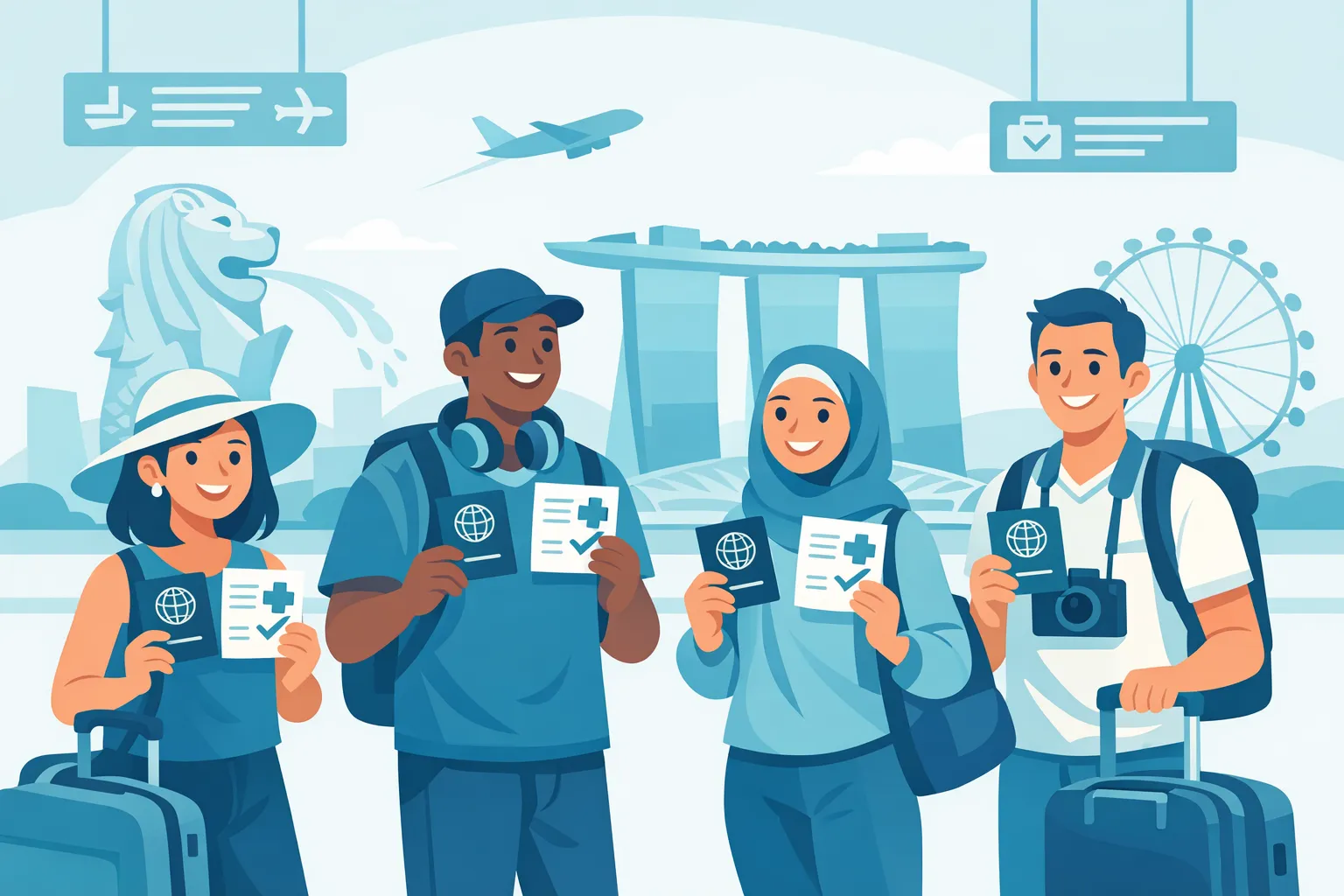
To enter Singapore, international travelers with chronic conditions need to carry a detailed medical report, a list of medications, and any necessary visas or travel documents. These documents ensure that in case of medical emergencies or routine checks, you have all necessary information at hand.
Travelers with chronic conditions often face the dual challenge of managing their health while navigating international travel regulations. Singapore, known for its stringent health policies, requires specific documentation to ensure your journey is as smooth as possible. The complexity of your condition may require additional documents and planning, making it crucial to be well-prepared before departure.
Ensuring you have the right health documents not only helps you clear immigration smoothly but also provides peace of mind. According to the International Society of Travel Medicine (ISTM), having an updated medical report and a list of medications can significantly aid healthcare providers abroad in case of an emergency. This is particularly vital in Singapore, where healthcare providers will need precise information to offer the best care tailored to your condition.
Planning ahead is key. Besides your essential travel documents, make sure your health information is easily accessible. This includes digital copies of your medical history and medications, preferably stored in a secure app or cloud service. Being proactive about your health documentation allows you to focus on enjoying your journey and experiencing the vibrant culture of Singapore without undue stress.
What travellers with this condition need to know
Medication Regulations and Availability
Travelers with chronic conditions must be aware of Singapore's strict regulations regarding medications. Certain medications that are legal and commonly prescribed in other countries may be controlled substances in Singapore. It is essential to check the status of your medications before traveling. The Health Sciences Authority (HSA) of Singapore provides detailed guidance on this matter. It is advisable to carry a doctor's prescription and a letter detailing the necessity of these medications. For further details, consult the CDC's travel advice for Singapore and the HSA guidelines.
Climate-Related Health Risks
Singapore's tropical climate can pose specific challenges for individuals with chronic conditions such as cardiovascular diseases and respiratory issues. High temperatures and humidity can exacerbate these conditions. Travelers should be prepared for the potential impact of extreme weather on their health and plan accordingly, such as by ensuring adequate hydration and avoiding prolonged exposure to heat. For more information on how climate can affect health, the World Health Organization (WHO) provides general guidelines on managing health in tropical climates.
Risk of Infectious Diseases
While Singapore is known for its high standard of healthcare and hygiene, travelers should still be aware of the risk of infectious diseases such as dengue fever, which is transmitted by mosquitoes. Those with chronic conditions should take extra precautions, such as using insect repellent and wearing long-sleeved clothing. The CDC's destination page for Singapore offers up-to-date information on health advisories and recommended vaccinations. It is crucial to consult with a healthcare provider to ensure all necessary vaccinations are up to date before traveling.
Before you travel: a practical checklist
- Schedule a comprehensive medical evaluation with your healthcare provider at least 4-6 weeks before departure to ensure your chronic condition is stable and manageable while abroad.
- Obtain a detailed medical report from your healthcare provider that includes your diagnosis, treatment plan, and any special instructions, which will be crucial in emergencies.
- Ensure all medications are in their original packaging, clearly labeled, and accompanied by a prescription from your doctor, as Singapore has strict regulations on medication importation.
- Check with the Health Sciences Authority of Singapore to confirm if any of your medications are considered controlled substances and require additional permits or declarations.
- Secure travel insurance that covers your chronic condition explicitly to avoid unexpected medical expenses. Verify the policy details to ensure there are no exclusions related to your condition.
- Prepare a list of emergency contacts, including your healthcare provider's contact information and the nearest hospital in Singapore, to ensure timely access to support if needed.
- Research the availability of your medications in Singapore and consider carrying an extra supply to cover unforeseen circumstances, such as delays or lost luggage.
- Familiarize yourself with the healthcare facilities and emergency services in Singapore, as this knowledge can expedite medical assistance if required.
- Review the latest health advisories and entry requirements for Singapore on the CDC website to stay informed about any changes that may affect your travel plans.
- Pack a first aid kit with essential supplies, including items tailored to your specific health needs, to address minor health issues independently while traveling.
During your trip: managing it abroad
Traveling with a chronic condition requires attentive management to ensure your health remains stable throughout your journey in Singapore. Here are practical strategies for managing your condition effectively while abroad:
1. Medication Management
Ensure you adhere to your prescribed medication regime strictly. Take your medications at the same time each day, even with the change in time zones. If your medication requires refrigeration, keep it between 2-8°C (35.6-46.4°F). Many hotels can provide a mini-fridge or ice packs for this purpose. Always carry a copy of your prescription when seeking a refill, and say to a local pharmacist, "I need to refill my prescription; here is my detailed medical report and prescription list." For more on medication management abroad, see the International Society of Travel Medicine (ISTM).
2. Monitor Your Symptoms
Track your symptoms closely. For instance, if you have diabetes, monitor your blood sugar regularly. If your blood sugar exceeds 300 mg/dL (16.7 mmol/L) or falls below 70 mg/dL (3.9 mmol/L), seek medical attention immediately. Make use of mobile apps to log your readings and set reminders. If you experience symptoms like chest pain or difficulty breathing, it is crucial to seek immediate medical assistance.
3. Hydration and Nutrition
Stay hydrated by drinking at least 2 liters (about 8 cups) of water daily, especially in Singapore's humid climate. Maintain a balanced diet that aligns with your health needs. If you have dietary restrictions, communicate clearly at restaurants by stating, "I have dietary restrictions due to a medical condition; can you accommodate this?"
4. Emergency Contacts
Always keep emergency contact numbers on hand, including local emergency services and your home country's embassy or consulate in Singapore. Share your travel itinerary and contact information with family or trusted friends. For a comprehensive list of emergency contacts in Singapore, visit the CDC website.
By following these strategies, you can focus on enjoying your trip while effectively managing your chronic condition. Always keep your health documents accessible, and don't hesitate to reach out for medical help if necessary.
How this changes by destination and situation
Traveling with a chronic condition means that your health management strategies may need to adapt based on your specific destination and the situations you encounter. Below is a guide to help you understand how different circumstances can affect your health management while traveling to Singapore or other destinations:
| Situation | What Specifically Changes |
|---|---|
| Heat | High temperatures in tropical climates like Singapore can exacerbate conditions such as cardiovascular diseases or diabetes. It's crucial to stay hydrated and avoid prolonged exposure to direct sunlight. Plan your activities during cooler parts of the day. |
| Altitude | While Singapore itself is at sea level, if your travels take you to high-altitude areas beforehand, be aware that altitude can affect respiratory and cardiovascular conditions. Acclimatization and gradual ascent are recommended by the WHO. |
| Long-haul flight | Sitting for extended periods can increase the risk of deep vein thrombosis (DVT). The CDC advises frequent movement, stretching, and staying hydrated on flights. |
| Cruise | Cruises can limit access to immediate healthcare facilities. Ensure you have enough medication for the entire duration and understand the onboard medical facilities available. |
| Limited healthcare infrastructure | In areas with limited healthcare access, carry a comprehensive medical report and ensure you have a local contact who understands your condition. The ISTM suggests travelers identify medical facilities before arrival. |
| Time-zone shift | Adjusting to a new time zone can disrupt medication schedules and sleep patterns. Gradually adjust your schedule before departure to minimize disruptions, as recommended by the CDC. |
By understanding how these situations affect your condition, you can better prepare for a safe and healthy journey.
In an emergency: what first responders need to know
In the event of a medical emergency, first responders must quickly access critical health information to provide effective care to travelers with chronic conditions. It is crucial that this information is easily accessible and up-to-date.
Key Information: Ensure that your medical ID card or bracelet prominently displays essential details such as your chronic condition(s), any severe allergies, current medications, and emergency contact information. This brief yet comprehensive overview allows responders to make informed decisions swiftly.
Digital and Physical Availability: In addition to wearing a medical ID, carry a physical copy of your detailed medical report and medication list in your wallet or travel bag. Store a digital version on a cloud service or mobile app like HealthPass, making it accessible even if physical documents are misplaced. Ensure that your smartphone has an emergency contact and medical information feature set up, which first responders can access without unlocking the device.
Language Considerations: Language barriers can complicate emergency situations. To mitigate this, have your medical information translated into the local language—Mandarin is commonly spoken in Singapore. You can use translation apps for quick assistance, but carrying a professionally translated document may prove more reliable in critical situations.
Communicating with First Responders: If you do not speak the local language, a translation card or app can assist. Ensure first responders understand your condition and needs by pointing to the translated documents or using simple phrases in English and the local language, prioritizing clarity and brevity.
Being prepared with these measures ensures that first responders have the information they need within seconds, enabling them to deliver prompt and effective care in emergencies.
How HealthPass helps
HealthPass offers essential tools for travelers with chronic conditions to navigate the health document requirements for entering Singapore. The HealthPass app allows you to securely store and access your health records, including detailed medical reports and a list of prescribed medications. This ease of access ensures you can present necessary documentation promptly if requested by Singaporean authorities.
For trip planning, HealthPass provides a comprehensive overview of destination-specific health requirements, which is especially beneficial for understanding Singapore’s strict medication regulations. This feature helps you verify which medications are permitted and guides you in obtaining any necessary documentation well in advance.
The destination requirements feature keeps you informed about Singapore’s health protocols and entry criteria, including updates related to COVID-19 and other health advisories. This ensures that you are well-prepared and compliant with all necessary regulations upon arrival.
In case of an emergency, the emergency card feature in HealthPass grants first responders immediate access to critical medical information. This can be crucial for travelers with chronic conditions, as it allows emergency services to provide timely and accurate care based on your specific health needs, potentially saving valuable time in critical situations.
Create your emergency card — it takes a minute and costs nothing.
Frequently asked questions
Q: Do I need a special visa to enter Singapore with a chronic condition?
A: No special visa is required specifically for travelers with chronic conditions. However, ensure your standard tourist or business visa is in order if required for your nationality. Always check the latest visa requirements on the official Singapore immigration website before traveling to ensure compliance.
Q: Can I bring my prescription medications into Singapore?
A: Yes, you can bring prescription medications into Singapore, but they must be accompanied by a doctor's letter or prescription. Singapore has strict regulations on certain medications, and some may require prior approval. Refer to the Health Sciences Authority's website for detailed guidance on medication importation.
Q: What should I do if my medication is confiscated at customs?
A: If your medication is confiscated, contact the Health Sciences Authority (HSA) for assistance. In urgent situations, visit a local clinic or hospital with your medical report to obtain similar medication. Always carry a copy of your prescription and doctor's contact information to facilitate the process.
Q: Are there restrictions on traveling with medical equipment to Singapore?
A: Travelers can bring medical equipment like insulin pumps or CPAP machines, but it's advisable to carry a doctor’s note and declare the equipment at customs. Ensure the equipment complies with Singapore's electrical standards. Check with your airline for specific in-flight requirements regarding medical devices.
Q: How can I access healthcare if I need it in Singapore?
A: Singapore has a robust healthcare system with numerous hospitals and clinics offering high-quality care. In an emergency, dial 995 for an ambulance. For non-emergency issues, consult the Ministry of Health Singapore's website for a list of healthcare providers and services available to travelers.
Q: Is travel insurance necessary for Singapore if I have a chronic condition?
A: Yes, travel insurance is highly recommended for travelers with chronic conditions. Ensure your policy covers medical emergencies and treatment in Singapore, including for pre-existing conditions. This provides peace of mind and financial protection in case of unexpected health issues during your trip.
What this guide does not cover
While this guide provides valuable information for travelers with chronic conditions entering Singapore, it does not cover the specific health entry requirements for every individual condition. For personalized advice, consult your healthcare provider or a travel medicine specialist, as they can offer tailored guidance based on your medical history and travel itinerary. Additionally, this guide does not address potential changes in Singapore's health regulations, which may occur. For the most current information, refer to authoritative sources such as the World Health Organization (WHO) or the Centers for Disease Control and Prevention (CDC).
If something happens abroad, the people treating you need your conditions, medications and allergies in seconds — in a language they read.
This guide is intended to provide general information for travelers with chronic conditions entering Singapore. It is not a substitute for professional medical advice. Always consult your healthcare provider for personalized recommendations. For official health guidelines, refer to the World Health Organization or Centers for Disease Control and Prevention.
Keep your medications, allergies and vaccinations with you abroad: a travel medical records app with an emergency card a doctor can read in five languages, or print a free emergency card in their language.