Choosing Between a Medical ID Bracelet and QR Emergency Card for Travel
Travel rules change. HealthPass does not update blog posts after they are published, so please check the current requirements before you travel.
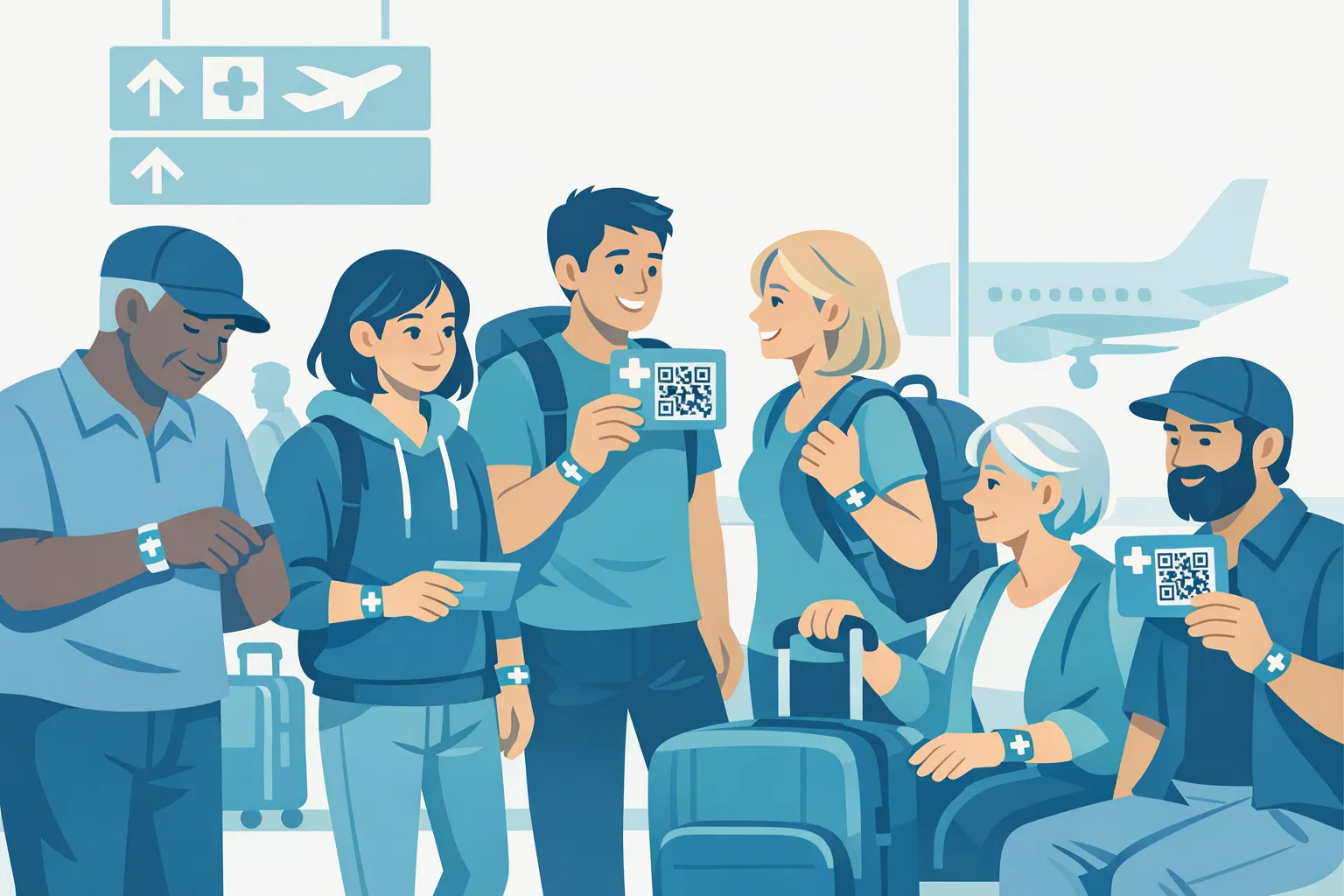
A medical ID bracelet provides instant, visible identification of your condition, while a QR emergency card offers detailed, updatable information accessible via smartphone. The choice depends on your personal needs and travel circumstances.
For travelers with chronic conditions, the decision between a medical ID bracelet and a QR emergency card can seem daunting. The goal is to ensure that, in an emergency, the right information is available swiftly to first responders and healthcare providers. Both options have unique advantages and considerations that can impact your choice.
A medical ID bracelet is a timeless solution that offers immediate recognition of critical health conditions, allergies, or necessary medications. Its simplicity and durability make it a reliable choice for those who prefer a straightforward approach. However, the information it can convey is limited to what can be engraved, which may not be enough in complex health scenarios.
On the other hand, a QR emergency card allows for more comprehensive and detailed information. This option is particularly beneficial for those with complex medical histories, as it can include medical records, emergency contacts, and medication lists. The QR card's information can be updated as needed, providing a flexible solution for dynamic health situations.
Ultimately, the right choice depends on your specific health needs, travel itinerary, and personal preference. Understanding the differences can empower you to make an informed decision, enhancing your safety and peace of mind during your travels.
What travellers with this condition need to know
Traveling with a chronic condition requires careful preparation and awareness of potential health risks. As you weigh the choice between a medical ID bracelet and a QR emergency card, understanding these risks can guide your decision. The Centers for Disease Control and Prevention (CDC) offers essential insights into managing chronic conditions while traveling.
Increased Risk of Severe Illness
Travelers with chronic conditions, such as cardiovascular disease or diabetes, may face an increased risk of severe illness if they contract infectious diseases. This is particularly pertinent in regions with endemic diseases like malaria or yellow fever. Chronic illnesses can compromise the immune system, making it harder for the body to fight off infections. According to the CDC, individuals with chronic conditions should ensure their vaccinations are up to date and consider additional preventive measures, such as prophylactic medications or mosquito repellents, depending on their destination.
Impact of Environmental Changes
Environmental factors, such as altitude, temperature, and air quality, can exacerbate chronic conditions. For instance, high altitudes can affect those with cardiovascular or respiratory conditions due to lower oxygen levels. Similarly, extreme temperatures and air pollution can worsen symptoms for individuals with asthma or chronic obstructive pulmonary disease (COPD). The CDC recommends consulting healthcare providers to understand how destination-specific environmental factors might impact your health and to develop a management plan accordingly.
Medication Management Challenges
Bringing and managing medications during travel can present challenges, especially when crossing international borders. Variations in medication availability and regulations require careful planning. The CDC advises travelers to carry a sufficient supply of medications, along with copies of prescriptions and a letter from their healthcare provider. It's also important to check the legality and availability of your medications in your destination country before departure.
In summary, travelers with chronic conditions must proactively manage their health risks by consulting healthcare providers, ensuring vaccination and medication readiness, and understanding environmental impacts. These precautions will help you make an informed choice between a medical ID bracelet and a QR emergency card, enhancing your safety and peace of mind during your travels.
Before you travel: a practical checklist
- Consult your healthcare provider at least six weeks before departure to discuss your travel plans and ensure your condition is stable enough for travel. This allows time to adjust any medications or treatments if necessary.
- Obtain a written summary of your medical history and make multiple copies. This document should include your diagnosis, current medications, allergies, and emergency contact information to facilitate communication with healthcare providers abroad.
- Check the CDC's travel health notices for your destination to understand any specific health risks or requirements that may impact your condition. Visit CDC Travel Health for more information.
- Research healthcare facilities at your destination to identify hospitals or clinics that can address your specific medical needs. Knowing where to go in an emergency can save valuable time.
- Ensure your travel insurance covers your chronic condition and any potential medical emergencies. Verify that your policy includes coverage for medical evacuation if necessary.
- Prepare a travel health kit containing all necessary medications, medical supplies, and a copy of your prescriptions. Pack enough medication to last your entire trip, plus a few extra days in case of delays.
- Consider language barriers that may affect communication about your condition. Having key phrases translated or using a translation app can facilitate better communication with local healthcare providers.
- Decide whether a medical ID bracelet or a QR emergency card better suits your needs based on your travel plans and the level of information you wish to share in an emergency.
- Inform your travel companions about your condition and educate them on how to assist you in an emergency. This knowledge can be crucial if you are unable to communicate.
- Review and update emergency contact information and ensure it is accessible both to you and to others who may need it.
- Check the entry requirements for medications in the countries you will visit to avoid legal complications. Some medications may require additional documentation or permits for importation.
During your trip: managing it abroad
Traveling with a chronic condition means staying attentive to your health needs, especially when in unfamiliar environments. Whether you choose a medical ID bracelet or a QR emergency card, the key is to manage your condition effectively while enjoying your trip.
1. Medication Management: Ensure you have an adequate supply of your medications for the entire trip, plus extra in case of delays. Follow dosing intervals as prescribed by your healthcare provider. If you misplace your medication, many pharmacists can help if you can provide the exact name and dosage. In such cases, say, "I need a replacement for [medication name] at [dosage]."
2. Temperature Control: Some medications require specific storage conditions. For instance, insulin should be stored at temperatures between 36°F and 46°F (2°C and 8°C). Consider using a portable cooler or insulated bag when traveling in hot climates to maintain this range.
3. Monitoring Your Condition: Track your health indicators, such as blood pressure or glucose levels, according to your normal schedule. If you experience symptoms outside your normal range, such as blood sugar levels consistently above 240 mg/dL, seek medical assistance promptly. The CDC provides guidelines on when to see a healthcare professional if chronic conditions worsen (cdc.gov/chronicdisease).
4. Communicating with Healthcare Providers: If you experience a health issue, being prepared with the right information is crucial. Your QR emergency card can provide foreign healthcare providers with comprehensive details in their language if you've inputted translations.
5. Seeking Help in Transit: If you feel unwell while on a flight, inform the cabin crew immediately. You might say, "I have a chronic condition and I'm feeling [symptoms]. Could you please assist me?" Many airlines have protocols to help passengers with medical needs and can coordinate with ground medical services if needed.
By taking these steps, you can minimize health risks and focus on the enjoyment of your journey. Always remember that both a medical ID bracelet and a QR emergency card are tools to empower you, ensuring that you receive the necessary support in any situation.
How this changes by destination and situation
| Situation | What Specifically Changes |
|---|---|
| Heat | In hot climates, staying hydrated and cool is crucial, as heat can exacerbate chronic conditions such as cardiovascular diseases. A medical ID bracelet can provide immediate recognition of your condition if you suffer from heat exhaustion, while a QR emergency card offers detailed information on your hydration needs and medication requirements. |
| Altitude | High altitudes can be challenging for individuals with respiratory or cardiovascular conditions due to lower oxygen levels. A medical ID bracelet can alert responders to your condition in the event of altitude sickness. Meanwhile, a QR emergency card can detail specific medical advice or medications you might need at higher altitudes. |
| Long-haul flight | During long flights, the risk of deep vein thrombosis (DVT) is higher, especially for those with circulatory or heart conditions. A medical ID bracelet can quickly inform flight attendants of your predisposition to DVT, while a QR emergency card can provide comprehensive instructions on how to manage DVT risks and other in-flight medical needs. |
| Cruise | On a cruise, access to medical facilities may be limited, and medical ID bracelets can offer immediate awareness of your condition to the ship's medical staff. A QR emergency card can supply additional information such as your medication regimen and emergency contacts, accessible even when at sea. |
| Limited healthcare infrastructure | In destinations with limited healthcare, access to your medical history becomes crucial. A medical ID bracelet can provide basic information in an emergency, but a QR emergency card can offer detailed medical history and instructions that can be critical when local medical resources are stretched. |
| Time-zone shift | Adapting to new time zones can disrupt medication schedules for chronic conditions. A QR emergency card can offer real-time updates on medication adjustments needed due to time changes, while a medical ID bracelet ensures immediate recognition of your condition in case of confusion or emergencies. |
In an emergency: what first responders need to know
In an emergency, swift access to critical health information can be lifesaving. For travelers with chronic conditions, first responders need to quickly understand your specific medical needs. Within the first thirty seconds, they must identify your condition, any allergies, current medications, and emergency contacts. This information should be easily accessible and prominently displayed.
A medical ID bracelet is a highly visible and immediate form of communication. It's designed to be recognized by first responders worldwide, offering quick insight into your condition without needing any technology. This is particularly beneficial if there is a language barrier, as medical symbols and condition names are often universally recognized. The World Health Organization (WHO) acknowledges the importance of clear and immediate access to medical information in emergencies, which a medical ID bracelet provides (WHO).
Conversely, a QR emergency card can provide more extensive details. Upon scanning with a smartphone, first responders can access a comprehensive medical profile, including doctor notes and detailed medical history. This can be crucial if your condition is complex or if specific treatment protocols are required. However, a QR emergency card may be less effective in areas with limited technology access or in situations where responders are not equipped to scan QR codes, particularly if language barriers exist.
Ultimately, the choice between a medical ID bracelet and a QR emergency card should consider your travel destination and the potential for language barriers. A combination of both may offer the most robust protection, ensuring that essential health information is always within reach for those who need it most.
How HealthPass helps
HealthPass offers several tools designed to support travelers with chronic conditions, whether you opt for a medical ID bracelet or a QR emergency card. By maintaining up-to-date health records, HealthPass ensures that your medical information is easily accessible. This feature allows you to carry a comprehensive health summary without needing physical documents, which can be crucial in emergencies or during medical consultations abroad.
For trip planning, HealthPass provides insights into destination-specific health requirements and risks, which helps you prepare adequately. This includes understanding necessary vaccinations, local healthcare facilities, and environmental factors that might impact your condition, based on guidance from the World Health Organization and Centers for Disease Control and Prevention.
The HealthPass QR emergency card is a valuable asset, offering first responders access to your critical health information in seconds. It complements a medical ID bracelet by providing detailed data beyond what can be inscribed on a bracelet, such as medication lists, allergies, and emergency contacts.
These features collectively save you time and stress, ensuring you can focus more on enjoying your travel experience while effectively managing your health needs.
Start your free HealthPass account — it takes a minute and costs nothing.
Frequently asked questions
Q: What is the difference between a medical ID bracelet and a QR emergency card?
A: A medical ID bracelet is a wearable item that provides immediate, visible information about your condition, while a QR emergency card offers extensive, updatable details accessible via a smartphone. Both serve the purpose of informing first responders of your medical needs in an emergency.
Q: Can I wear both a medical ID bracelet and have a QR emergency card?
A: Yes, you can use both for added security. The bracelet provides instant recognition of your condition, while the QR card offers detailed medical history. This combination can be particularly useful if you have multiple or complex medical conditions.
Q: Are there places where QR emergency cards are not effective?
A: QR emergency cards may be less effective in regions with limited internet access or where smartphones are not widely used. In such cases, a medical ID bracelet, which does not rely on technology, may be a more reliable option for immediate identification.
Q: Do I need to update my QR emergency card before every trip?
A: It's advisable to update your QR emergency card before each trip to ensure it contains the most current information about your medical condition and treatments. This ensures that first responders have access to accurate information, which can be critical in an emergency.
Q: How can I ensure the information on my medical ID bracelet is sufficient?
A: Include essential information such as your name, primary medical condition, allergies, and an emergency contact number. For more complex conditions, consider a QR emergency card for detailed medical information. Consult your healthcare provider for specific advice on what to include.
Q: What should I do if my QR emergency card is lost during travel?
A: If you lose your QR emergency card, promptly update your HealthPass account and reissue a new card if possible. Meanwhile, make sure your travel companions are aware of your condition and carry a written summary of your medical information as a backup.
What this guide does not cover
While this guide aims to assist travelers with chronic conditions in choosing between a medical ID bracelet and a QR emergency card, it does not cover detailed legal requirements for carrying medical information in specific countries. Legal variations can impact how medical data is accessed or stored, and these are critical considerations when planning your travel. For comprehensive legal advice, you should consult local authorities or legal professionals familiar with international travel regulations. The International Society of Travel Medicine (ISTM) can be a useful resource for finding travel medicine specialists who can provide the most relevant guidance for your destination.
Keep this checklist, your medications and your documents in one place you can open at a border, a pharmacy or an emergency room.
The information provided in this guide is intended for general informational purposes only and should not be construed as medical advice. Always consult your healthcare provider for personalized advice and treatment plans before making travel decisions. For more details on preparing for travel with chronic conditions, visit the CDC or WHO websites.
Keep your medications, allergies and vaccinations with you abroad: a travel medical records app with an emergency card a doctor can read in five languages, or print a free emergency card in their language.